Difficulty falling or staying asleep is often linked to stress, anxiety, or habits that overstimulate the mind—such as scrolling on a phone late into the night. While these challenges are common, there are practical steps that can help improve sleep quality. Experts recommend creating a more restful environment by keeping the bedroom tidy and replacing stimulating drinks like coffee or green tea with calming herbal alternatives formulated to support sleep.
For those who respond well to gentle movement, restorative yoga can be an especially effective way to unwind before bed.
What Is Restorative Yoga?
According to senior HOME yoga instructor Anna Ashby, restorative yoga is designed to help the body and mind return to a state of balance. She explains that the practice supports nervous system regulation and overall well-being by encouraging deep rest and relaxation.
Unlike more active yoga styles, restorative yoga moves at a slow, intentional pace. It uses props such as bolsters and blankets to fully support the body, allowing muscles to soften and tension to release. Ashby notes that by consciously slowing down and grounding the body with supportive props, practitioners gain the space to notice habitual tension patterns and gently let them go through breath awareness and presence.
The primary aim of restorative yoga is to calm the nervous system’s “fight-or-flight” response and activate the parasympathetic “rest-and-digest” state. Ashby emphasizes that prioritizing this type of relaxation not only sets the stage for better sleep, but also contributes to greater balance, resilience, and vitality in everyday life.
To help promote restful sleep, Ashby recommends the following three restorative yoga poses to practice in the evening. You’ll need a yoga mat, a bolster or firm pillow, and a blanket.
Three Gentle Yoga Poses to Support Better Sleep
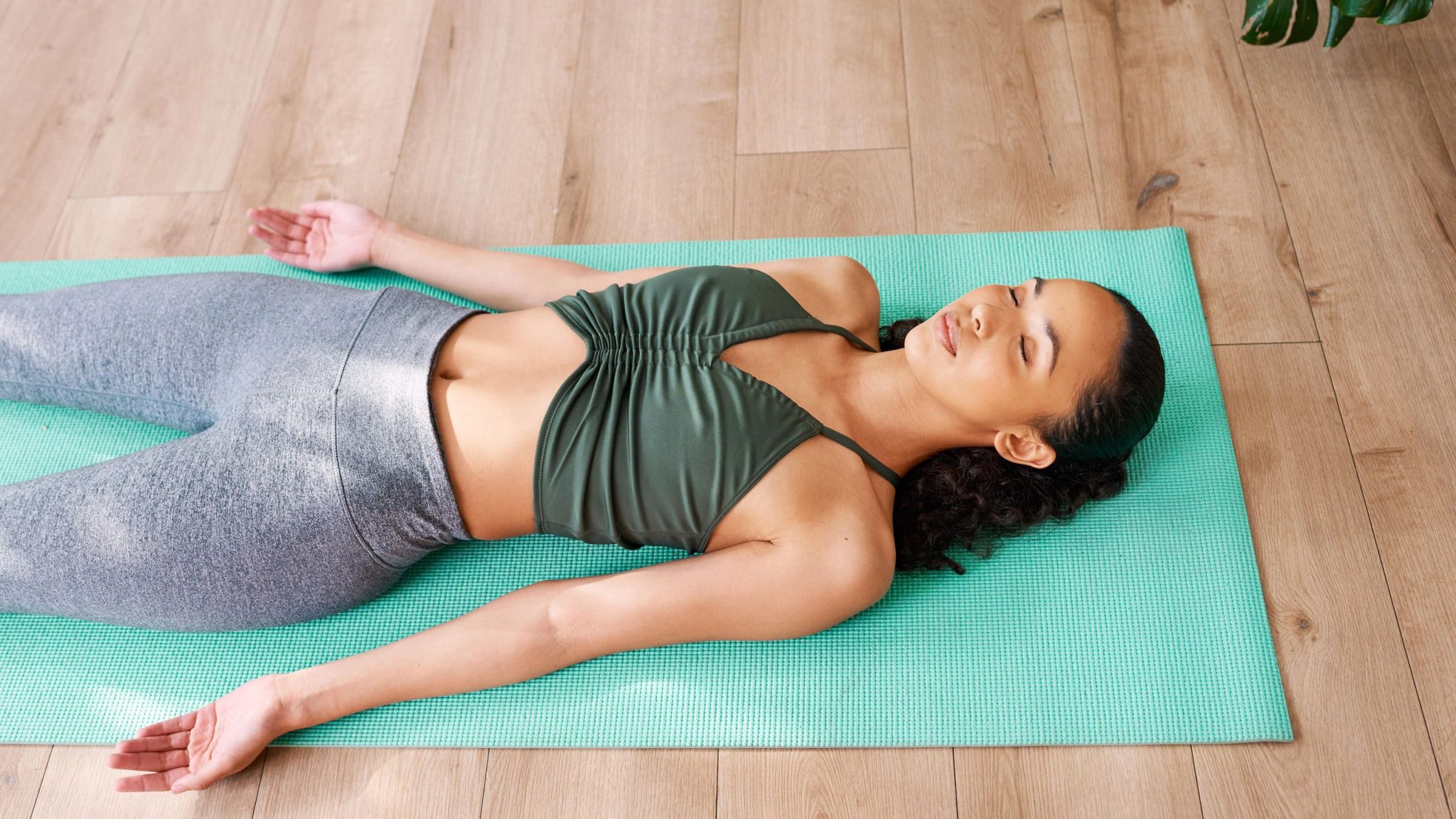
1. Savasana with Legs Elevated
- Place a blanket on your mat for warmth and comfort.
- Position two foam blocks or sturdy supports end to end, topped with a bolster or pillow, to elevate your feet.
- Slightly raise another bolster under the thighs using a yoga brick or similar support.
- Fold a blanket and place it under your pelvis, adjusting it so your hips feel gently cradled.
- Support your head with a folded blanket, shaping it to support the base of the skull.
- Lie on your back and allow the body to fully relax.
- Hold for: 10–20 minutes.
2. Supported Child’s Pose
- Kneel with your knees apart and big toes touching, then ease your hips back toward your heels.
- If your knees are sensitive, place a rolled blanket between your thighs and calves. Skip the pose if discomfort persists.
- Rest your torso on a bolster and turn your head to one side.
- Allow your breath to slow naturally.
- Hold for: About 5 minutes.
3. Legs Up the Wall (Viparita Karani)
- Lie on your back and extend your legs up a wall, placing a blanket under your head.
- Position your hips close to—but not pressed tightly against—the wall to avoid strain in the hamstrings.
- Let your legs rest comfortably, supported by the wall rather than held up by effort.
- Soften your shoulders and jaw as you breathe.
- Hold for: 5–10 minutes.
Practicing these restorative poses before bed can help release physical tension, quiet the mind, and prepare the body for deeper rest. Whether you’re managing stress or simply looking to unwind at the end of the day, these gentle movements can support both immediate relaxation and long-term sleep quality.
For more wellness and lifestyle guidance, stay connected with Tom’s Guide for expert insights, practical tips, and the latest updates in health and well-being.

Team Health Accessible
Health & Wellness Editorial Team
HealthAccessible editorial team delivers trusted, accessible, and evidence-based health information for everyone.