
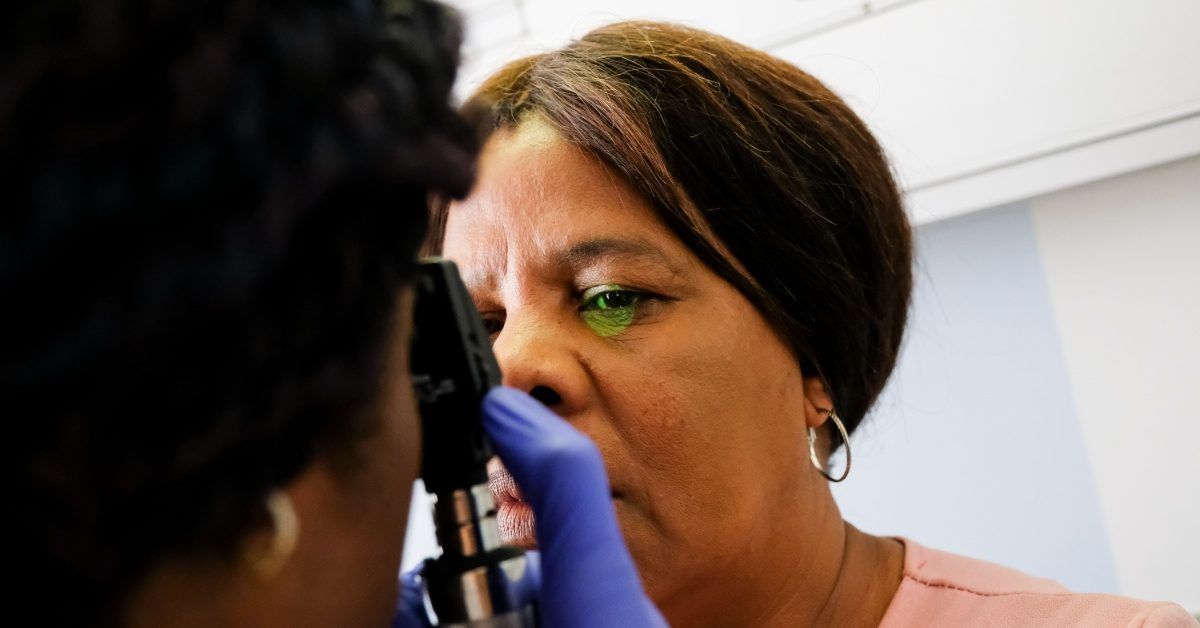
- As the popularity of GLP-1 medications continues to increase, further research is examining the potential side effects. This may include possible eye issues and vision loss. However, there is currently conflicting information about how these drugs may affect vision.
- In a target trial emulation, GLP-1 use was associated with a small increase in the risk of nonarteritic anterior ischemic optic neuropathy (NAION), but the absolute risk was very low, making the event rare despite the relative increase.
- In a Swedish study, people starting GLP-1 drugs did not have a significantly higher risk of NAION than those starting SGLT2 inhibitors, suggesting that any increased risk is likely to be small.
- Taken together, both studies suggest that GLP-1s may be associated with a small increase in NAION risk, but the absolute risk appears very low, indicating it is unlikely to be a common clinical risk.
As the use of glucagon-like peptide-1 (GLP-1) agonists for type 2 diabetes and weight loss continues to grow, so too does the research examining their potential impact on other areas of health, including possible eye issues and vision loss.
Previous research has linked GLP-1 use to potentially-blinding eye conditions. Specifically, research highlights a possible association with semaglutide, the active ingredient in medications such as Ozempic.
Other studies suggest that other drugs containing semaglutide, such as Wegovy, are more likely to cause adverse events causing vision loss.
Most studies propose a link between GLP-1 use and the development of ischemic optic neuropathy (ION), an uncommon eye condition that can cause sudden, painless vision loss due to blood not flowing properly to the eye’s optic nerve.
Nonarteritic anterior ischemic optic neuropathy (NAION) is the
Now, two separate studies suggest that while GLP-1 receptor agonists may slightly increase the risk of vision loss, the side effect remains very rare, meaning the likelihood of it occurring in people taking these medications is low.
The United States and Swedish studies, both published in the Annals of Internal Medicine, found that people with type 2 diabetes who begin treatment with GLP-1s may have a slightly higher risk of developing NAION.
However, the study authors suggest that the condition remains rare and the overall benefits of these medications are unchanged.
Researchers from Rutgers University analyzed healthcare data from a large U.S. database of insurance claims from adults aged 18 to 65 with type 2 diabetes who started glucose-lowering medication.
Compared with people taking other diabetes medications, such as SGLT-2 inhibitors or DPP-4 inhibitors, those treated with GLP-1 drugs had a higher relative risk of ischemic optic neuropathy. However, the researchers stressed that the condition remained uncommon.
“We found that GLP-1 receptor agonist use was associated with a small increase in the 18-month risk of ischemic optic neuropathy compared with SGLT2 inhibitors and DPP-4 inhibitors,” U.S. study author Chintan Dave, PharmD, PhD, Associate Professor of Pharmacy and Epidemiology at the Rutgers Ernest Mario School of Pharmacy and Rutgers School of Public Health, explained to Medical News Today.
“The signal was concentrated among adults aged 50 to 65 years and men, who accounted for approximately 85% and 70% of events, respectively. The main takeaway is that clinicians and patients should be aware of this potential risk, particularly in these higher-risk groups, while recognizing that the absolute risk remained very low,” Dave detailed.
Over an 18-month period, the increase amounted to approximately three to four additional cases per 10,000 patients treated with GLP-1 medications.
“This corresponds to approximately one additional case for every 3,333 or 2,778 patients treated, respectively. Even among patients aged 50 to 65 years and men, who generally had a higher risk, the event remained rare,” the researcher told us.
The study authors add that although the condition is rare, it is clinically important because vision loss can occur suddenly and may be permanent.
“Sudden, painless changes in vision, particularly dimming or blurring in one eye, loss of part of the visual field, or sudden vision loss, should prompt urgent, same-day evaluation by an ophthalmologist or emergency department,” Dave emphasized.
Researchers from the Karolinska Institutet analyzed nationwide healthcare data from adults aged 35 to 84 years with type 2 diabetes in Sweden between 2013 and 2024.
The study included more than 293,000 participants who started either a GLP-1 drug or an SGLT-2 inhibitor. After 1 year of follow-up, the risk of NAION was 0.04% among people taking a GLP-1 medicatio and 0.02% among those taking an SGLT-2 inhibitor.
Although this represents a higher relative risk among GLP-1 drug users, the study authors stressed that the adverse event remained rare in both groups.
“Patients and physicians should interpret these numbers as a demonstration that the risk of having NAION can increase with use of a GLP-1RA medication. The risk, however, is still quite low,” Benjamin Bert, MD, a board-certified ophthalmologist at MemorialCare Orange Coast Medical Center in Fountain Valley, CA, who was not involved in the study, told MNT.
“Relative risk showed that there was double the chance of having NAION in the GLP-1RA group compared to the SLGT-2 group, that sounds very dramatic, but when you look at the absolute numbers, an increase in 0.02% is quite low,” Bert pointed out.
Similar to the U.S. study, in practical terms, this corresponds to roughly four cases per 10,000 people taking a GLP-1 drug over 1 year, compared with 2 cases per 10,000 people taking an SGLT-2 inhibitor.
However, further research is still necessary to fully understand the association between GLP-1 use and NAION risk, and the role of confounding variables.
“In a large population study there is likely to be many confounding variables,” Bert added. “Those can become even more challenging when you are looking at a disease like NAION that is rare to begin with.”
“The overall results found that there was an increased risk of having NAION due to GLP-1RA use. However, it was a small increase and the authors felt that it could be due to the confounding variables they uncovered in this study.”
– Benjamin Bert, MD
The researchers of both studies caution that the findings should be interpreted carefully and should not change current prescribing practices.
As the studies were observational, they cannot prove that GLP-1 medications directly caused the increase in risk. Instead, the authors suggest it may highlight underlying differences between those receiving GLP-1s and other diabetes medication.
For example, those taking GLP-1s may have more advanced or a higher burden of cardiovascular risk factors, both of which are independently associated with optic nerve disease.
For most people, the study authors conclude that the proven benefits of GLP-1 drugs for those with type 2 diabetes, such as improvements in blood glucose control, weight loss, and reductions in cardiovascular and kidney disease risk, outweigh this potential safety signal.
“I would not recommend stopping a GLP-1 medication solely because of this study,” Dave categorically emphasized.
“These medications have substantial benefits for diabetes, cardiovascular disease, kidney disease, and weight management, and the potential excess risk identified in our study was very small,” he noted.
“Patients who are older, male, or have preexisting ophthalmic conditions may wish to discuss their individual risk with their clinician, but these findings should promote awareness rather than alarm,” Dave advised.
According to Bert:
“It is important to be aware of the risks and side effects associated with any treatment. In this case, as we learn more about the medications, there will be more data available. This helps us to understand more about the possible side effects. Newer medications then can help to adjust their mechanism of action to lower those risks.”
“So, while the risk is still very low, if there is a concern, you may want to discuss that with your doctor and see if there is another GLP1 medication that could have a lower risk profile for causing NAION,” the ophthalmologist told us.
Although both studies suggest that GLP-1 use may be associated with a small increase in the risk of developing NAION, the condition remains very uncommon, and any potential increase in risk is likely to be small in absolute terms.
While the new findings contribute to an evolving and sometimes conflicting body of evidence linking GLP-1 use to vision loss, the authors conclude that they underscore the importance of continued monitoring as use of GLP-1 medications expands worldwide.
It is advisable for people taking diabetes medication to seek prompt medical attention if they experience sudden changes in vision, including painless vision loss or new blind spots.

Team Health Accessible
Health & Wellness Editorial Team
HealthAccessible editorial team delivers trusted, accessible, and evidence-based health information for everyone.