- A new large study suggests an association between higher nighttime light exposure and changes in heart structure and function.
- People exposed to more light at night had thicker walls in the left ventricle and less space within heart chambers compared with those exposed to very little nighttime light.
- Individuals also had reduced flexibility of the heart muscle during a heartbeat, along with changes in the heart’s size, shape, structure, and function, consistent with those that occur in response to injury, stress, or increased workload.
- While the study does not prove that nighttime light causes heart disease, the findings may help explain links between light pollution and cardiovascular disease.
Growing research highlights the potential role of
Over time, repeated exposure to these environmental stressors may contribute to an increased risk of cardiovascular conditions, including heart disease and stroke.
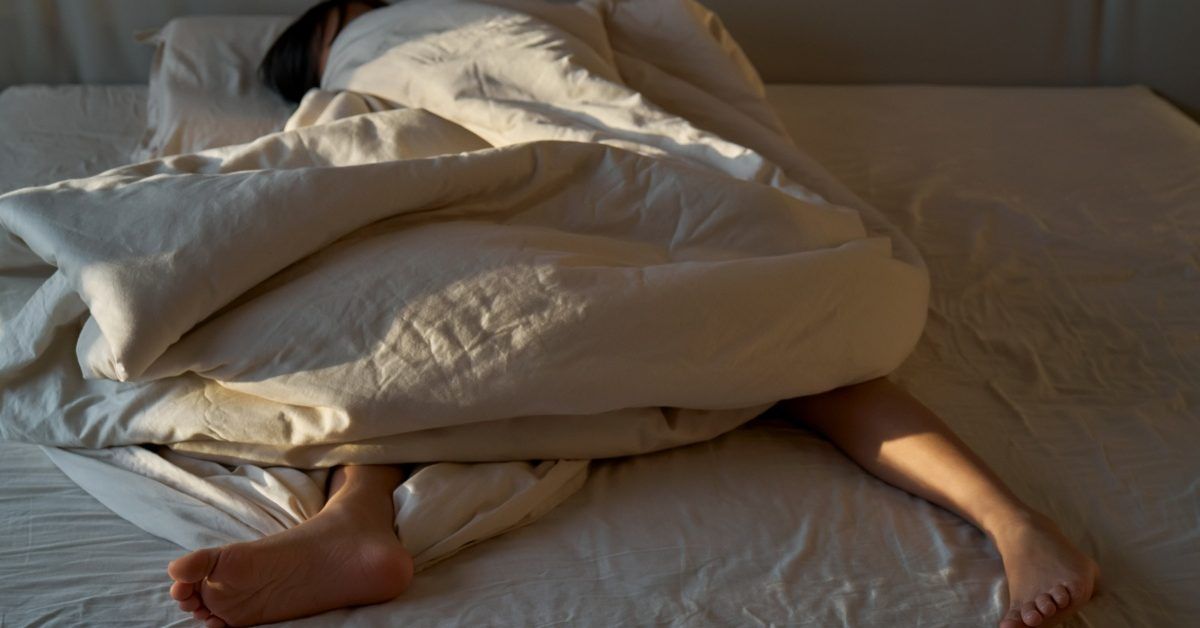
Artificial light has become an almost unavoidable part of modern life, with streetlights, illuminated buildings, electronic devices, and even small LEDs in the bedroom making it difficult to experience complete darkness after sunset.
Now, researchers suggest that regular exposure to excessive light at night may be associated with structural and functional changes in the heart that could eventually contribute to cardiovascular disease.
The findings, published in the European Heart Journal, add to evidence linking nighttime light exposure with cardiovascular health.
The researchers analyzed data from 11,071 participants in the UK Biobank. They wore a wrist-mounted sensor for 7 days that measured their light exposure, allowing researchers to estimate how much light they experienced at night.
Approximately 3 years later, participants underwent cardiac magnetic resonance imaging (MRI), enabling the researchers to examine the heart’s structure and function.
The researchers compared those exposed to more than 3 lux of light at night with people who experienced almost no nighttime light exposure. Lux is a measurement of illuminance. For context, a very dark night outdoors can have illumination below 1 lux, while indoor lighting can be considerably brighter.
The findings suggest that people with greater nighttime light exposure showed several differences in cardiac structure and function.
“There are many cardiac measures, roughly two types — one is functional changes (without physical alterations) and another is structural changes (with physical activity). These changes occur before the incidence of cardiovascular diseases,” lead study author Lu Qi, MD, PhD, FAHA, from Tulane University, explained to Medical News Today.
Notably, higher nighttime light exposure was associated with a thicker left ventricular wall and a smaller space within the chamber. The researchers also identified signs that the heart muscle’s ability to flex during a heartbeat was reduced. They also observed changes in the right ventricle and left atrium, suggesting that the association was not limited to a single part of the heart.
The observed changes were consistent with cardiac remodeling, a process in which the heart changes its structure and function in response to ongoing stress or injury.
Cardiac remodeling can initially represent an adaptation that helps the heart cope with increased demands. However, over time, adverse remodeling can contribute to impaired cardiac function and increase the risk of heart failure.
As an observational study, the findings cannot directly establish that nighttime light causes these changes. However, the researchers suggest that several biological mechanisms could potentially help explain the association.
“Our data indicate short sleeping may account for a high proportion of the observed adverse association, suggesting nighttime exposure may affect sleep duration and quality, which subsequently increases CVD risk,” Qi told MNT.
Light is an important signal that the body uses to set its circadian clock. Exposure to light at night may interfere with the biological signals that normally tell the body that it is nighttime. As such, this disruption may affect sleep, hormone production, metabolism, blood pressure, and other physiological processes.
Previous research has linked nighttime light exposure with cardiovascular risk, while broader evidence suggests that circadian disruption
The researchers also found that people who experience more light at night may differ from those who sleep in darker environments in other ways. For example, nighttime light exposure can be associated with urban living, working schedules, sleep habits, socioeconomic factors, and use of electronic devices.
As such, the researchers cannot completely rule out the possibility that these factors contributed to the findings.
The researchers also measured participants’ light exposure over a relatively short period and then assessed their hearts approximately 3 years later. This makes it difficult to determine precisely how long-term nighttime exposure relates to changes in the heart.
As such, further research will be necessary to determine whether reducing nighttime light exposure can prevent or reverse these cardiac changes.
Despite the uncertainties, reducing unnecessary light exposure at night is relatively straightforward.
For example, Qi suggests “To turn off artificial light in the bedroom and close the window curtain that may completely block moonlight when preparing to sleep.”
Other options could include using warmer, dimmer lighting in the evening, covering small LEDs on electronic devices, and using blackout curtains or an eye mask to reduce light reaching the eyes during sleep.
For people who use smartphones, tablets, or computers late at night, reducing screen exposure before bedtime may be another way to limit nighttime light, although screens are only one potential source of artificial light.
At the population level, the issue is broader, with outdoor lighting from roads, buildings, advertising, and other sources contributing to light pollution.
In an accompanying editorial, Thomas Münzel, MD, Environmental Cardiologist at the University Medical Center of Johannes Gutenberg University Mainz, and Chairman of the European Society of Cardiology Task Force on Environmental Sustainability, suggests that better-designed, shielded, warmer-spectrum, and appropriately dimmed lighting could reduce unnecessary nighttime illumination without compromising safety.
Although the findings cannot establish a direct link, they add to the growing body of research investigating how the modern environment, including artificial light, disrupted sleep, air pollution, noise, and other factors, may influence cardiovascular health.
For now, getting sufficient sleep and maintaining a dark sleeping environment are relatively low cost measures that may support healthy circadian rhythms. Whether deliberately reducing nighttime light exposure can lower the risk of heart disease remains an important question for future research.
“The effect sizes are modest in absolute terms but consistent, dose-dependent, and observed across every cardiac chamber — which is what makes them noteworthy,” said Thomas Münzel, MD.
“Compared with no nighttime light exposure above 3 lux, the highest-exposure group showed 2.4% greater LV mass, 1.5% greater wall thickness, 1.9% lower myocardial contraction fraction, and roughly 3% reductions in circumferential, radial, and longitudinal strain, plus right ventricular and left atrial changes,” he said.
These aren’t hypothetical: in the parallel outcomes analysis of over 73,000 participants followed 8–10 years, the same exposure gradient tracked with a 29% higher risk of heart failure, 24% higher risk of myocardial infarction, 33% higher risk of stroke, and 26% higher cardiovascular mortality.
Münzel likened the health impact of this to living under a flight path, a recognized environmental cardiovascular risk factor, and said nighttime light exposure is a serious, independent cardiovascular risk factor with no safe lower limit.
“The important caveat: this remains observational data, so causation isn’t proven, and the absolute individual-level risk from light exposure alone is small next to established factors like hypertension or smoking. Its significance is more than it identifies a previously invisible, modifiable contributor sitting alongside the exposures we already screen for,” he added.
Thomas Münzel, MD, listed some questions to ask heart failure and atrial fibrillation patients during a routine visit:
- How dark is your bedroom at night — do you use blackout curtains or blinds, or is streetlight/outdoor lighting coming through the window?
- Do you leave a TV, phone, tablet, or other screen on, or use it in bed before falling asleep?
- Are there small standby LEDs (chargers, smoke detectors, electronics) lit in the room overnight?
- Do you work night shifts or rotating shifts?
- Roughly how many hours do you sleep, and is your sleep frequently interrupted?
“None of these require special equipment, they’re a two-minute addition to a standard sleep-hygiene conversation, and the interventions that follow (blackout curtains, warm-spectrum lighting, covering standby LEDs) are inexpensive and low risk to suggest regardless of how the evidence base develops further,” he added.
“The study’s exposure definition, nighttime light above 3 lux during a person’s five least-active hours, was chosen because experimental work has shown light levels as low as roughly 3 lux can suppress nocturnal melatonin secretion in humans,” Thomas Münzel, MD, explained.
He said there was no proven number (such as a specific light setting) at which risk drops to zero— “darker is better” for the heart.
He also underscored the importance of making the room genuinely dark. In practice, he said people should aim for zero light hitting their eyes while sleeping. He recommended using blackout curtains, turning off nightlights and phones, and covering any tiny LED power lights on electronics.\
“What’s missing, and what the editorial explicitly calls for, are randomized trials of blackout curtains, dim warm-spectrum lighting, or dark-sky interventions powered on hard cardiometabolic endpoints (LV strain, blood pressure, HbA1c) rather than subjective sleep-quality measures — until those exist, we’re extrapolating from observational dose-response data and melatonin physiology rather than a clinically established number,” he concluded.

Team Health Accessible
Health & Wellness Editorial Team
HealthAccessible editorial team delivers trusted, accessible, and evidence-based health information for everyone.