
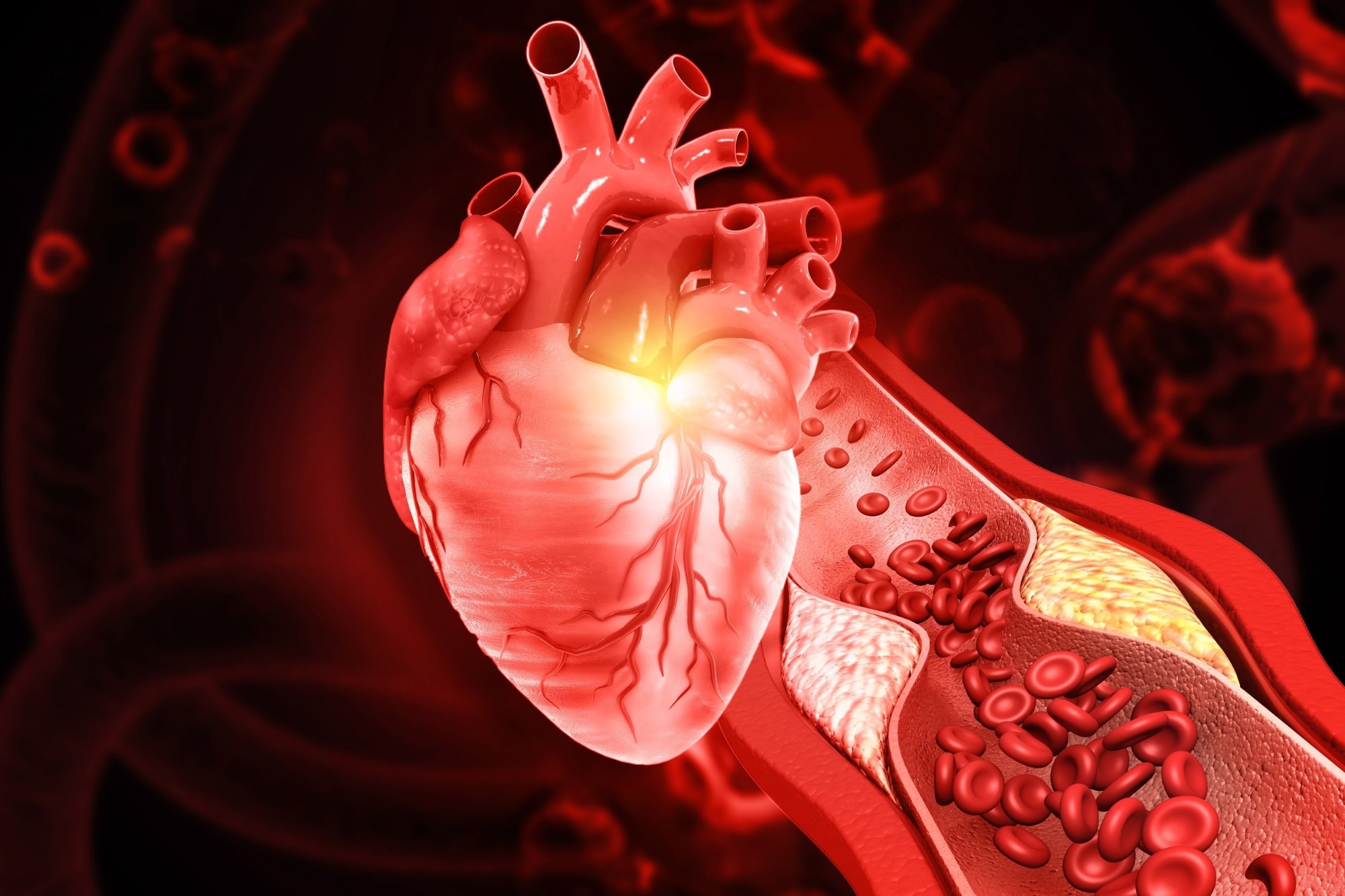
A major multi-cohort study found that several gut microbiota-related metabolites in the bloodstream were linked to later coronary heart disease, pointing to new biomarker and therapeutic targets while underscoring that the evidence is still observational.
Study: Circulating gut microbial metabolites and risk of coronary heart disease: A prospective multi-stage metabolomics study. Image Credit: Explode / Shutterstock
In a recent study published in the journal PLOS Medicine, researchers identified gut microbial metabolites associated with incident coronary heart disease (CHD).
CHD is the leading cause of mortality worldwide and in the United States. Research on gut microbiota has provided crucial insights into CHD etiology and prevention, with significant implications for therapeutic development. The gut microbiota generates numerous metabolites, many of which are not produced by humans. These microbial metabolites enter circulation and exert systemic effects on host health and disease.
Most evidence linking microbial metabolites to cardiovascular disease (CVD) or CHD arises from clinical cohorts or cross-sectional studies, which are susceptible to confounding and reverse causation. Moreover, most studies have evaluated only a limited number of microbial metabolites. Therefore, comprehensive prospective investigations with rigorous validation across diverse populations are needed.
Multi-Cohort Study Design and Methods
In this study, researchers evaluated gut microbial metabolites associated with incident CHD across Asian, Black, and White populations. A multistage metabolomics study was conducted across five prospective cohorts: the Southern Community Cohort Study (SCCS), the Shanghai Women’s Health Study (SWHS), the Shanghai Men’s Health Study (SMHS), the Multi-Ethnic Study of Atherosclerosis (MESA), and the Atherosclerosis Risk in Communities (ARIC).
Participants were included if they had no history of CHD, heart failure, stroke, end-stage renal disease, or cancer at baseline, had available plasma samples, and had not used antibiotics or experienced cold or flu symptoms in the week before sampling. Case-control pairs were identified and matched, with 150 pairs in each sex and race selected for discovery.
Untargeted metabolite profiling was performed for discovery in SCCS, SMHS, and SWHS. Metabolites were identified using reference libraries and linked to gut microbial origin through database mapping and associations with antibiotic use. In silico validation was conducted in MESA and ARIC.
For targeted validation, a quantitative assay measured selected metabolites. Conditional logistic regression models estimated odds ratios for incident CHD. Model 1 adjusted for age, while model 2 further adjusted for socioeconomic and lifestyle factors, including body mass index (BMI).
Key Microbial Metabolites Associated With CHD
The mean age of 896 incident CHD cases and controls was 57 years. Cases had lower socioeconomic status, lower physical activity, higher BMI, and a higher prevalence of metabolic risk factors than controls.
Forty-eight of 226 metabolites were significantly associated with CHD in model 1, with 43 remaining significant in model 2. Subgroup analyses identified additional associations, resulting in 73 significant metabolites overall.
These metabolites spanned pathways involving amino acids, carbohydrates, nucleotides, xenobiotics, energy metabolism, lipids, and vitamins. Of 61 metabolites available for in silico validation, 24 were confirmed with consistent directional effects.
The targeted assay quantified key metabolites, including 3-hydroxybutyrate, taurine, trans-4-hydroxyproline, 4-hydroxyphenylpyruvate, 4-hydroxyphenylacetate, 1-methyl-4-imidazoleacetate, imidazole propionate, and 3-hydroxy-2-ethylpropionate.
In the validation stage, nine metabolites were significantly associated with CHD in fully adjusted models. These included imidazole propionate, 3-hydroxy-2-ethylpropionate, 4-hydroxyphenylacetate, trans-4-hydroxyproline, 3-hydroxybutyrate, trimethylamine N-oxide, phenylacetyl-L-glutamine, 4-hydroxyhippuric acid, and indolepropionate.
Some associations varied across subgroups, with stronger effects observed in certain populations. However, most interactions were not statistically significant after correction for multiple testing. Several associations were attenuated after adjusting for metabolic conditions, suggesting partial mediation.
Implications for CHD Prevention and Research
This study identified and validated nine circulating gut microbiota-derived metabolites associated with incident CHD across diverse populations. These findings support a role for microbial metabolism in CHD etiology and highlight potential targets for future mechanistic studies and therapeutic development.
However, the observational design does not establish causality. Some metabolites could not be validated across all stages due to assay limitations, and residual confounding remains possible. Stronger associations in early follow-up suggest that preclinical disease may have influenced some findings.

Team Health Accessible
Health & Wellness Editorial Team
HealthAccessible editorial team delivers trusted, accessible, and evidence-based health information for everyone.