
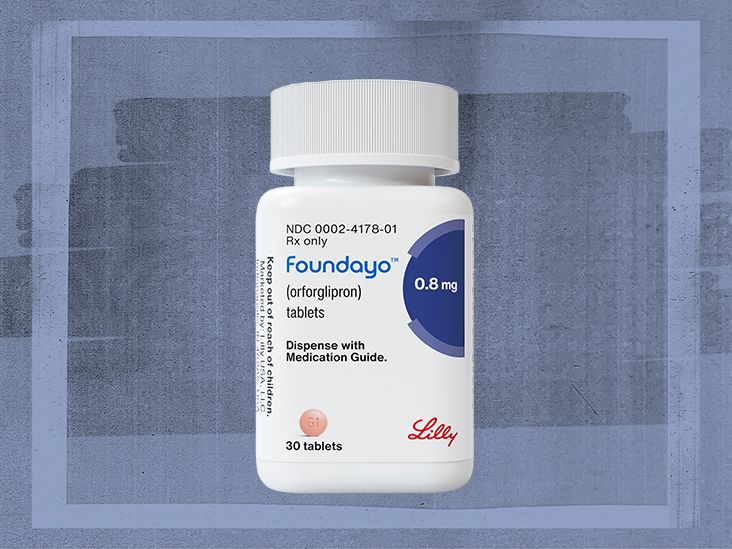
- The Food and Drug Administration (FDA) has approved Eli Lilly’s Foundayo (orforglipron), a once-daily oral glucagon-like peptide-1 (GLP-1) receptor agonist, which offers a noninjectable option for weight management.
- Clinical data suggests the drug supports meaningful weight loss and can be taken without strict food or timing requirements, potentially improving ease of use and adherence.
- The approval was expedited through the FDA’s National Priority Voucher program, a new initiative designed to speed up access to treatments addressing major public health needs.
- Orforglipron’s approval highlights both the growing role of GLP-1 therapies in weight loss and the potential for faster regulatory pathways, bringing new treatments to patients sooner.
The Food and Drug Administration (FDA) has approved Eli Lilly’s once-daily oral GLP-1 receptor agonist, orforglipron, for adults with obesity, or overweight with weight-related medical problems.
This approval makes Eli Lilly’s oral GLP-1 receptor agonist, to be marketed as Foundayo, the second GLP-1 drug available in pill form, after Wegovy, which gained approval in December 2025.
In March 2026, a
Foundayo is notable not only for its oral formulation but also for being among the first medications approved under the FDA’s new
GLP-1 receptor agonists have transformed the management of obesity and type 2 diabetes in recent years. Evidence suggests roughly
Obesity remains a
Thus, there is a
However, most currently available therapies are administered via injection. Research notes that many people report a preference for oral medication over injections, and injectable drugs can act as a barrier for initiating treatment.
“There is no single path that works for everyone living with overweight or obesity,” said Joe Nadglowski, president and CEO of the Obesity Action Coalition, in a press release.
“New treatment options expand choice and help more people find care that fits their lives, their goals and where they are in their journey – whether they’re just starting to explore treatment or looking for a different long-term approach,” noted Nadglowski.
Oral formulations may expand access to treatment, particularly for those reluctant to use injectable medications. They may also offer greater convenience and may be easier to scale and distribute than injectable alternatives.
After approving oral Wegovy in December 2025, the FDA has now also approved
Clinical trial data shows that participants taking Foundayo achieved meaningful weight loss compared with placebo, reinforcing its potential as an effective treatment option.
Richard Frank, MD, MHSA, Chief Medical Officer at Vida Health, spoke to Medical News Today about how orforglipron may expand access to GLP-1s: “The choice between a pill and an injectable comes down to patient preference and potency.”
“The injectables are clearly more potent but require a weekly injection. Whereas pills do not require a needle, which is appealing to a lot of patients,” added Frank.
He explained that:
“The Wegovy pill has to be taken in the morning on an empty stomach with a time delay before consuming any food or drink. Whereas Orforglipron can be taken any time during the day with or without food. While this makes Orforglipron more convenient, it is also less potent.”
As noted above, unlike some existing oral GLP-1 therapies, Foundayo can be taken any time of day without restrictions on food and water intake, which may improve adherence for some individuals.
“People living with obesity need treatment options that meet them where they are – and for many, a once-daily pill that can be taken with no food or water restrictions can offer them greater flexibility in how they approach their treatment,” said Deborah Horn, DO, director of the Center for Obesity Medicine at McGovern Medical School
at UTHealth Houston, in a press release.
“With Foundayo, we now have an oral option that delivered an average of 12.4% weight loss at the highest dose in clinical trials – addressing both the clinical realities of obesity and the practical challenges patients face every day,” Horn noted.
Notably, a key feature of this approval is its link to the FDA’s National Priority Voucher (CNPV) program.
Announced in June 2025, the CNPV program aims to expedite the review of drugs that address unmet medical needs, improve affordability, or support public health priorities.
Under this scheme, selected medicines may receive a significantly shortened review timeline. In some cases, it could take as little as 1 to 2 months compared with the typical 10 to 12 months.
Orforglipron was granted one of these
The FDA has stated that the initiative is intended to pioneer “new ways of bringing these cures and meaningful treatments to the market faster,” particularly in areas of high public health need.
The approval of orforglipron signals both a shift toward more accessible obesity treatments and a test case for the FDA’s new accelerated review pathway. The CNPV program may play an increasingly important role in speeding up access to therapies that address urgent health challenges.
If widely adopted, oral GLP-1 therapies could reshape obesity treatment, making effective medications easier to use, distribute, and integrate into long-term care.
“Treating obesity with behavior change, generic anti-obesity medications, and GLP-1 seems to reduce the risk profile associated with all of these [cardiometabolic] diseases,” Frank added.
According to him, “Tracking, monitoring, and optimizing this risk reduction is critical to reducing the complications of cardiovascular-kidney-metabolic disease.”
However, as with other GLP-1 receptor agonists, orforglipron carries safety considerations. Potential side effects may include gastrointestinal symptoms such as nausea, vomiting, and constipation.
Additionally, the drug label includes a boxed warning related to a potential risk of thyroid tumors. Therefore, it is advisable for people to discuss the potential risk and benefits of GLP-1 medications with their healthcare providers.
 ᐧ
ᐧ