
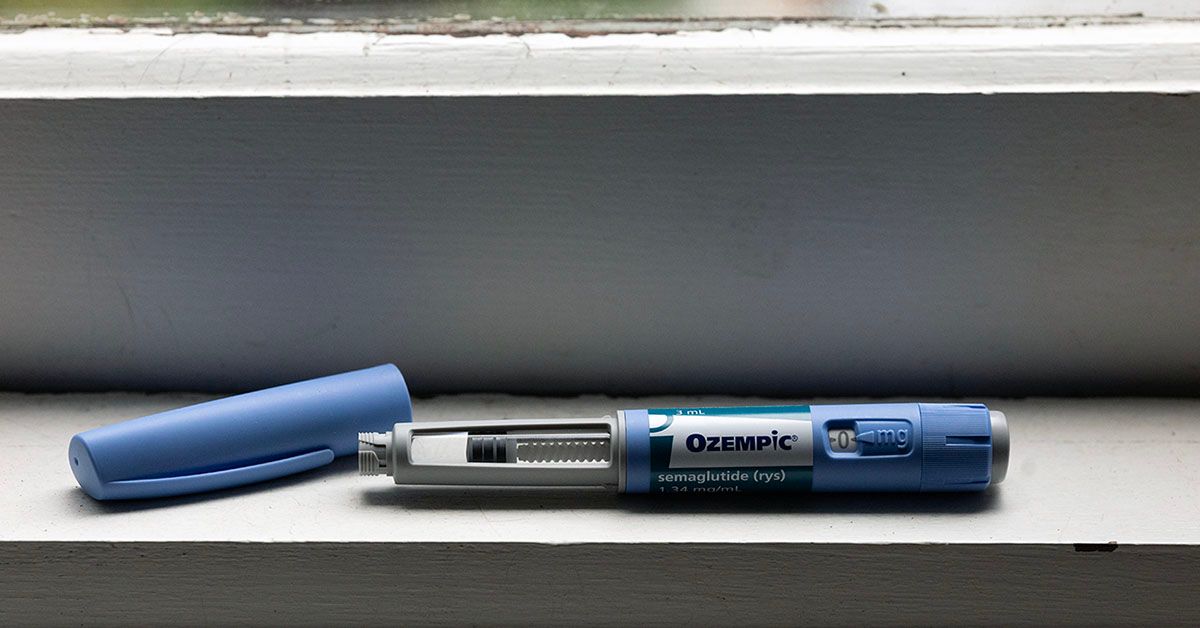
- Recent studies have linked GLP-1 medications to potential heart health benefits, such as reducing a person’s risk for heart attack and stroke.
- A new study found that GLP-1 drugs might assist with heart attack recovery by lowering a person’s risk of developing major complications, via a mouse model.
- These known heart attack recovery complications can increase a person’s chances of hospital admission for heart failure or death.
Recent studies have linked
Now a new study published in the journal
In this study, researchers found using a mouse model that GLP-1 drugs might assist with heart attack recovery by lowering a person’s risk of developing major complications that can increase a person’s chances of hospital admission for heart failure or death.
For this study, researchers used a mouse model to examine how GLP-1s might impact major heart complications after heart attack.
“Our earlier research showed that a natural protective response, mediated by the vagus nerve, releases GLP-1 from the gut, and this dramatically reduces the infarct size,” Svetlana Mastitskaya, MSci, PhD, senior lecturer in cardiovascular regenerative medicine at Bristol Medical School: Translational Health Sciences (THS) at the University of Bristol, United Kingdom, and lead author of this study, told Medical News Today.
“We also know that the no-reflow — failure to reopen capillaries after myocardial infarction — and a medical procedure called percutaneous intervention (PCI) affect up to
“There is a robust relationship between microvessel occlusion and mortality or hospitalization for subsequent heart failure within 1 year, with a 1% increase in vessel occlusion predicting 14% and 11% increases in death and hospitalization, respectively,” she continued.
“We also showed before that pericytes — the small contractile cells covering capillaries in the heart — are responsible for this no-reflow phenomenon, so we wanted to see if GLP-1 drugs could directly solve the capillary blockage problem,” the researcher noted.
At the study’s conclusion, researchers found that GLP-1 drugs improved blood flow to the heart following a mouse-model of a heart attack.
This, researchers found, was done through the activation of potassium channels, resulting in a relaxation of pericytes. In turn, this allowed constricted blood vessels to dilate, helping reduce the risk for no-reflow and further heart damage.
“We identified exactly how GLP-1 restores blood flow at the cellular level,” Mastitskaya detailed.
“Pericytes are cells that squeeze capillaries shut during a heart attack. GLP-1 activates specific potassium channels that make pericytes relax, reopening the capillaries. This gives us a clear target for treatment. Since no-reflow strongly predicts poor outcomes, drugs that address this mechanism could significantly improve survival and recovery.”
– Svetlana Mastitskaya, MSci, PhD
“GLP-1 binds to receptors on pericytes and triggers a chain reaction: it opens potassium channels, which changes the cell’s electrical charge, which reduces calcium entering the cell,” she continued. “Less calcium means the pericyte relaxes its grip on the capillary, allowing blood to flow through again.”
For the next steps in this research, Mastitskaya and her team would like to see clinical trials testing GLP-1 drugs given during heart attack treatment.
“We’re also interested in developing versions of these drugs that specifically target heart capillaries, which could provide cardiac protection with fewer side effects than current formulations,” she added.
MNT had the opportunity to speak with Cheng-Han Chen, MD, a board-certified interventional cardiologist and medical director of the Structural Heart Program at MemorialCare Saddleback Medical Center in Laguna Hills, CA, about this study.
“This study found a mechanism [in a mouse model] by which GLP-1 drugs could improve blood flow in the smallest blood vessels in the heart after a heart attack,” Chen, who was not involved in this research, told us. “This is a promising line of research which could potentially increase the types of therapies we have available to us to help manage heart attack patients.”
“Heart disease is the
MNT also spoke with Andrew Adelsheimer, MD, a cardiologist at Atlantic Health, who commented that his first reaction was that this is an elegant mechanistic study that uses an animal model to discover the potential cardioprotective effect of GLP-1.
“This is important research because numerous cardiovascular outcomes trials have shown reductions in major adverse cardiovascular events with GLP-1 receptor agonists — trials such as LEADER, SUSTAIN-6, and REWIND,” Adelsheimer, who was likewise not involved in the research, explained.
“However, we often wonder, is this purely from weight loss and glucose control, or is there a more direct effect on the heart? In brief, this study shows that GLP-1 signaling promotes improved blood flow to the heart in a simulated heart attack.”
– Andrew Adelsheimer, MD
“The specific mechanism is that GLP-1 receptors are present on coronary capillary cells (pericytes) and activate signaling via energy-dependent potassium channels (K ATP channels) to promote
“This is a potential explanation for the observed benefit of GLP-1 receptor agonists in reducing cardiovascular adverse events. Clinically, we use GLP-1 receptor agonists widely, and it is important to understand how they are helping patients,” noted Adelsheimer.
For the next steps in this research, Adelsheimer said he would like to first see a re-creation of this mechanistic study using human tissue.
“Second, translational human studies showing the effect of GLP-1 on coronary microvascular parameters, including coronary flow reserve, index of microcirculatory resistance, imaging correlates,” he added. “Third, outcomes trials in acute heart attack patients and in other patient populations.”

Team Health Accessible
Health & Wellness Editorial Team
HealthAccessible editorial team delivers trusted, accessible, and evidence-based health information for everyone.