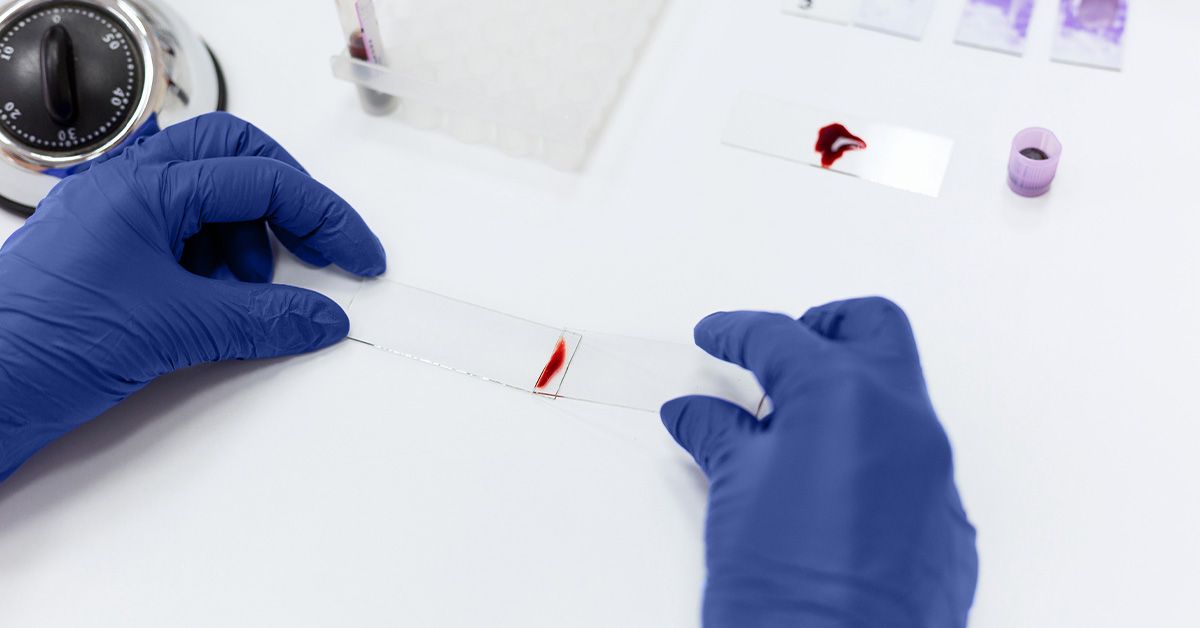
- Blood-based biomarkers of Alzheimer’s disease can be a more accessible and scalable alternative to other diagnostic methods involving expensive imaging scans or invasive cerebrospinal fluid analysis.
- Alzheimer’s disease involves the abnormal accumulation of a protein called tau in the brain, and various phosphorylated tau species (p-tau) can be detected in the blood.
- Data from tightly controlled research settings have shown that plasma levels of p-tau 217, a form of phosphorylated tau, are elevated in individuals with Alzheimer’s disease and can predict dementia risk.
- A new study conducted in older women shows that blood levels of p-tau217 were associated with the future risk of mild cognitive impairment or dementia up to 25 years before symptom onset.
A blood test measuring the levels of the p-tau217, a protein associated with Alzheimer’s disease-related brain changes, could predict the risk of dementia in older women up to 25 years before symptom onset, reports a new study published in
Ian McDonough, PhD, associate professor at State University of New York at Binghamton, who was not involved in the study, said, “The study suggests that p-tau217 has good (but not great) predictability of all-cause dementia/MCI.”
“The farther out one tries to make predictions, the harder it can be. By identifying concrete evidence that one’s risk is elevated earlier in life, one can still have time to change one’s lifestyle (e.g., better sleep, less stress, more exercise, more cognitive and social engagement) to reduce that risk for subsequently developing dementia,” he told Medical News Today.
The study also showed how factors, such as age, race, and genetic predisposition, influenced the association between p-tau217 levels and the risk of dementia. This study furthers our understanding of p-tau217’s association with dementia risk in real-world settings, beyond the controlled conditions of clinical trials.

Team Health Accessible
Health & Wellness Editorial Team
HealthAccessible editorial team delivers trusted, accessible, and evidence-based health information for everyone.