
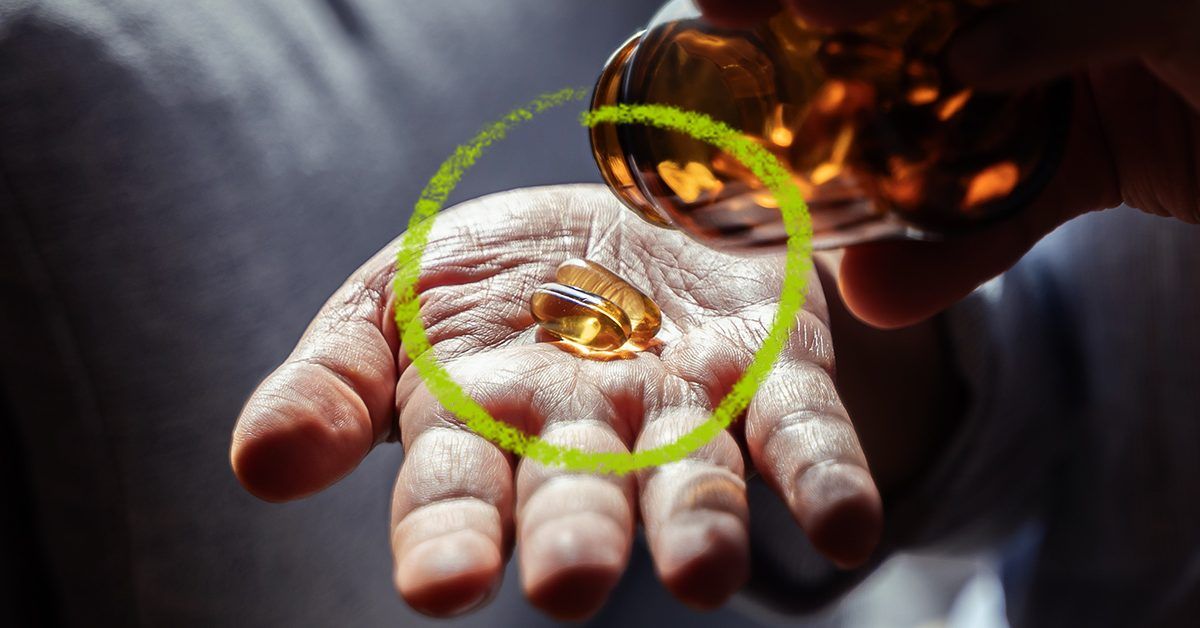
- Docosahexaenoic acid (DHA) is an omega-3 fatty acid. It is found in fish, but people can also take supplements containing it.
- Research is mixed on whether DHA helps with cognition.
- One study found that among adults with no dementia and low omega-3 intake, taking DHA supplements did not provide brain benefits, including among participants at a high risk for Alzheimer’s disease.
People are often on the lookout for ways to improve brain health and possibly prevent cognitive problems like dementia.
One area of interest in the research is
A recent study published in
Researchers found that while supplementation did increase DHA levels, participants did not show benefits when it came to brain changes and cognition. The findings suggest that DHA supplements alone may not help with dementia prevention.
As noted in this study, people who have the APOE ε4 allele have a higher genetic risk for developing Alzheimer’s disease. People with APOE ε4 status also tend to have lower levels of DHA, and lower DHA is also linked to late-onset Alzheimer’s disease.
Researchers of the current study wanted to see if supplementing with high-dose DHA before the onset of dementia could be helpful.
The trial was a randomized, double-blind, single-center phase 2 placebo-controlled study. Participants were 55 to 80 years old and did not have dementia at baseline. They also had lower intake of DHA and at least one risk factor for dementia or cardiovascular problems.
Participants either received DHA supplementation or a placebo for 2 years, with study visits every 6 months. Researchers evaluated certain brain changes and also measured levels of DHA in cerebrospinal fluid among some participants.
Exploratory outcomes included looking at components like plasma biomarkers of Alzheimer’s disease and cognitive performance. Researchers also collected blood samples from participants to look at fatty acid concentrations.
In the end, 365 participants were randomized, and 225 participants completed the entire study. Researchers further divided participants into a group that underwent lumbar puncture to collect cerebrospinal fluid samples and those who did not. Almost half of participants had the APOE ε4 allele.
Compared to the placebo, DHA supplementation appeared to help with DHA levels in cerebrospinal fluid at 6 months. This was true for participants who were APOE ε4 carriers and those who were not. Additionally, DHA supplementation also increased blood levels of DHA.
While there were some brain changes that occurred throughout the course of the study, DHA supplementation did not appear to have a significant impact.
When it came to cognitive function, DHA supplementation appeared not to impact the results, and this was true for APOE ε4 carriers and non-carriers. Safety outcomes were similar between the placebo and intervention groups.
Thus, while DHA did reach the brain through supplementation, the results suggest that it didn’t help with certain brain changes or cognitive function. Study author Hussein N. Yassine, MD, Professor of Neurology, Medicine, and Physiology & Neuroscience, Keck School of Medicine of USC, Kenneth and Bette Volk Professor in Neurology, and Director at the Center for Personalized Brain Health, USC, explained the following:
“The main finding of our research is that high-dose DHA, an omega-3 fatty acid, was able to reach the brain in older adults who were at risk for dementia and had low omega-3 intake…However, even though the DHA reached the brain, we did not see improvements in memory, thinking skills, or brain structure over the 24-month study.”
“This is an important distinction: getting more DHA into the brain does not automatically mean that it will prevent memory loss or dementia, at least not when taken as a supplement by itself over this time period.”
– Hussein N. Yassine, MD
This study was thorough and included a placebo and intervention group. However, there are still some limitations. Mainly due to COVID-19, there was a 38% drop-out rate in the study, which may have affected the results, and there was also missing data to consider.
There are also some limitations when it comes to generalizability. For example, researchers note that there were differences between participants who completed the study and those who did not, which may limit generalizability.
Misclassification is also possible. For example, some participants could have been experiencing cognitive problems that researchers missed. Some data also came from participant reporting. One author noted some possible competing interests as well.
Researchers note their possibly limited ability to truly detect the effects of the intervention because of certain factors like how participants were relatively young.
They also admit that their study population “may not represent typical clinical prevention populations.” Choosing to focus on just one nutrient also has its limits.
Finally, researchers note measurement variability because they chose to use “questionnaire-based lifestyle measures with broad cognitive inclusion criteria.”
More long-term data with more detailed measurements may be helpful as research moves forward.
Overall, the results of this research indicate that consuming DHA supplements does not help the brain. Yassine noted that “our findings do not support the idea that people should take high-dose DHA supplements alone to prevent dementia.”
However, this doesn’t mean that omega-3s are not important. Yassine explained the following:
“Omega-3s remain an important part of a healthy diet. Foods rich in omega-3s, such as fatty fish, support overall heart and brain health and should be encouraged as part of a balanced dietary pattern…In clinical practice, these results suggest that we should focus less on single-supplement approaches and more on overall brain-healthy lifestyles.”
“That includes eating a balanced diet that contains omega-3-rich foods, staying physically active, controlling blood pressure and cholesterol, sleeping well, and managing other dementia risk factors.”
Non-study author Dung Trinh, MD, internist, of MemorialCare Medical Group and Chief Medical Officer of Healthy Brain Clinic in Irvine, CA, also noted the following:
“The supplement did reach the brain, but it did not improve brain outcomes. That distinction matters. The problem may not be delivery; the problem may be that Alzheimer’s risk is driven by multiple interacting pathways, including vascular disease, inflammation, insulin resistance, sleep disruption, inactivity, hearing loss, depression, medication effects, and underlying amyloid/tau biology.”
“The better strategy is a multimodal brain-health approach, not a single supplement.” Trinh added that this can involve components like controlling vascular risk factors, staying physically active, optimizing sleep, and detecting cognitive problems early.

Team Health Accessible
Health & Wellness Editorial Team
HealthAccessible editorial team delivers trusted, accessible, and evidence-based health information for everyone.