
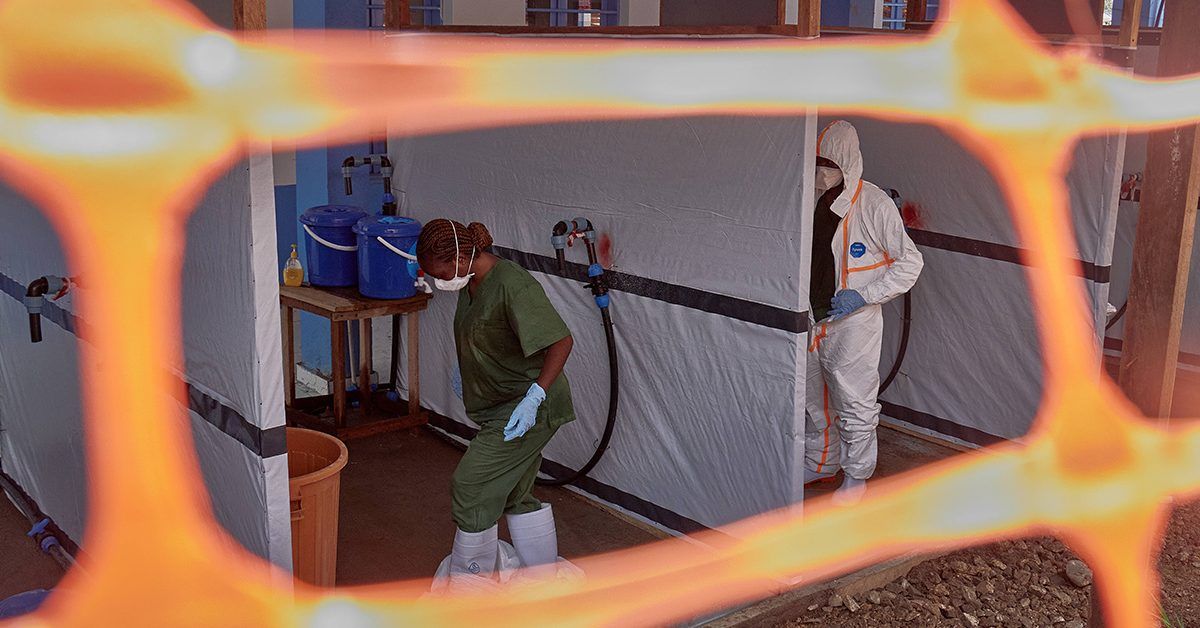
- The Eastern Democratic Republic of the Congo (DRC) has experienced one of the largest single-day increases in confirmed Ebola cases since the outbreak was declared in May 2026.
- Health authorities report the number of confirmed Ebola cases in DRC has increased to 782, with 181 deaths.
- However, the true number of cases in DRC may be higher because the outbreak likely began weeks before it was confirmed, and contact tracing has declined.
- Speaking to Medical News Today, infectious disease expert Monica Gandhi explains the fast spread of the virus, discuses current vaccine development, and emphasizes that a global spread is unlikely.
According to Congolese officials, a report from June 13, 2026 highlights 72 new confirmed cases of Ebola, including 29 deaths, marking one of the highest daily increases since the outbreak was declared in May.
An updated report from June 16, 2026 now brings the total confirmed cases in the Democratic Republic of the Congo (DRC) up to 837, including 196 confirmed related deaths, and 376 individuals hospitalized in isolation.
The outbreak is centered primarily in the Ituri province of the DRC, with 767 confirmed cases from 20 health zones. There are also 67 confirmed cases from 10 health zones, and three cases from one health zone in North Kivu and South Kivu, respectively.
However, the number of cases in the DRC is likely higher, as the outbreak was officially confirmed on
Unlike many previous Ebola outbreaks in the DRC, the current epidemic is caused by the
The Centers for Disease Control and Prevention (CDC) maintains that the risk of the ongoing outbreak
Medical News Today again speaks with Monica Gandhi, MD, MPH, an infectious disease specialist and professor of medicine at the University of California, San Francisco, about the rising number of Ebola cases, vaccine development, and the potential for global spread.
“The current Ebola outbreak in the DRC is caused by a strain called the Bundibugyo virus which is a distinct species of the ebolavirus family without current vaccines or treatments,” Gandhi explained.
A majority of previous Ebola outbreaks have been due to the Zaire strain, which was responsible for the 2014–2016 outbreak in West Africa, the largest Ebola disease outbreak to date.
“This particular outbreak of Ebola, a virus that can cause severe symptoms of headache, muscle aches, fever, abdominal pain, cough, sore throat and, eventually, hemorrhage and death, was initially not detected in the region because authorities did not realize this outbreak was caused by Bundibugyo rather than the more common ‘Zaire’ strain requiring a different diagnostic test,” noted Gandhi.
“By the time the WHO declared a public health emergency of international concern on May 17, the virus had already spread considerably and — without any vaccines or treatment — the only way to contain the virus is isolation of someone who is sick, contact tracing, and quarantine of exposed contacts,” she told us.
“The virus is spreading because it is difficult to track and isolate all exposed cases in the middle of a conflict zone in the DRC where people may be fleeing attacks and not respond to health directives. The US withdrawal from the WHO and collapse of USAID is a huge blow to global health containment efforts as the U.S. used to be a major player in global health.”
– Monica Gandhi, MD, MPH
“Finally, the rapid rise in cases over 1 day could also reflect more diagnostic testing and active surveillance, which is helpful since exposures of those positive cases can then be quarantined,” Gandhi hypothesized.
“Yes, as soon as this outbreak was revealed to be due to the bundibugyo virus, which currently has no licensed vaccine available, the race for a vaccine candidate began,” said Gandhi.
“The World Health Organization (WHO) reviewed whether Erbevo, the vaccine against the Zaire strain, should be tried,” Gandhi noted.
However, the WHO consensus is that Erbevo should not be used outside carefully designed research settings.
“Other possible vaccine candidates include an rVZV Bundibugyo vaccine being developed by the International AIDS Vaccine Initiative (IAVI) although the vaccine will not be ready to be tested in clinical trials for 7 to 9 months,” Gandhi added.
“This vaccine uses a viral vector called varicella zoster vaccine and another viral vector vaccine and an mRNA vaccine are under development, although they won’t be ready for testing for some time,” she explained.
Despite the growing number of cases, Gandhi maintains that the current Ebola outbreak is unlikely to evolve into a pandemic.
Due to the nature of the virus, safely implementing public health measures should be sufficient to contain the current outbreak.
“Ebola is a virus that is spread by close contact with the body fluids of an infected person or someone who has died from Ebola,” she emphasized.
“Since the virus is not spread by respiratory droplets and is not spread when someone is asymptomatic (prior to getting sick), we believe this viral outbreak will eventually be contained without global spread if effective contact tracing, isolation and quarantine can be performed,” Gandhi told us.
“This requires the presence of health authorities, U.S. investment back into the WHO in my opinion, and vigilance for as long as the outbreak lasts with a continuing race for the development of effective vaccines and treatments,” the infectious disease expert concluded.

Team Health Accessible
Health & Wellness Editorial Team
HealthAccessible editorial team delivers trusted, accessible, and evidence-based health information for everyone.