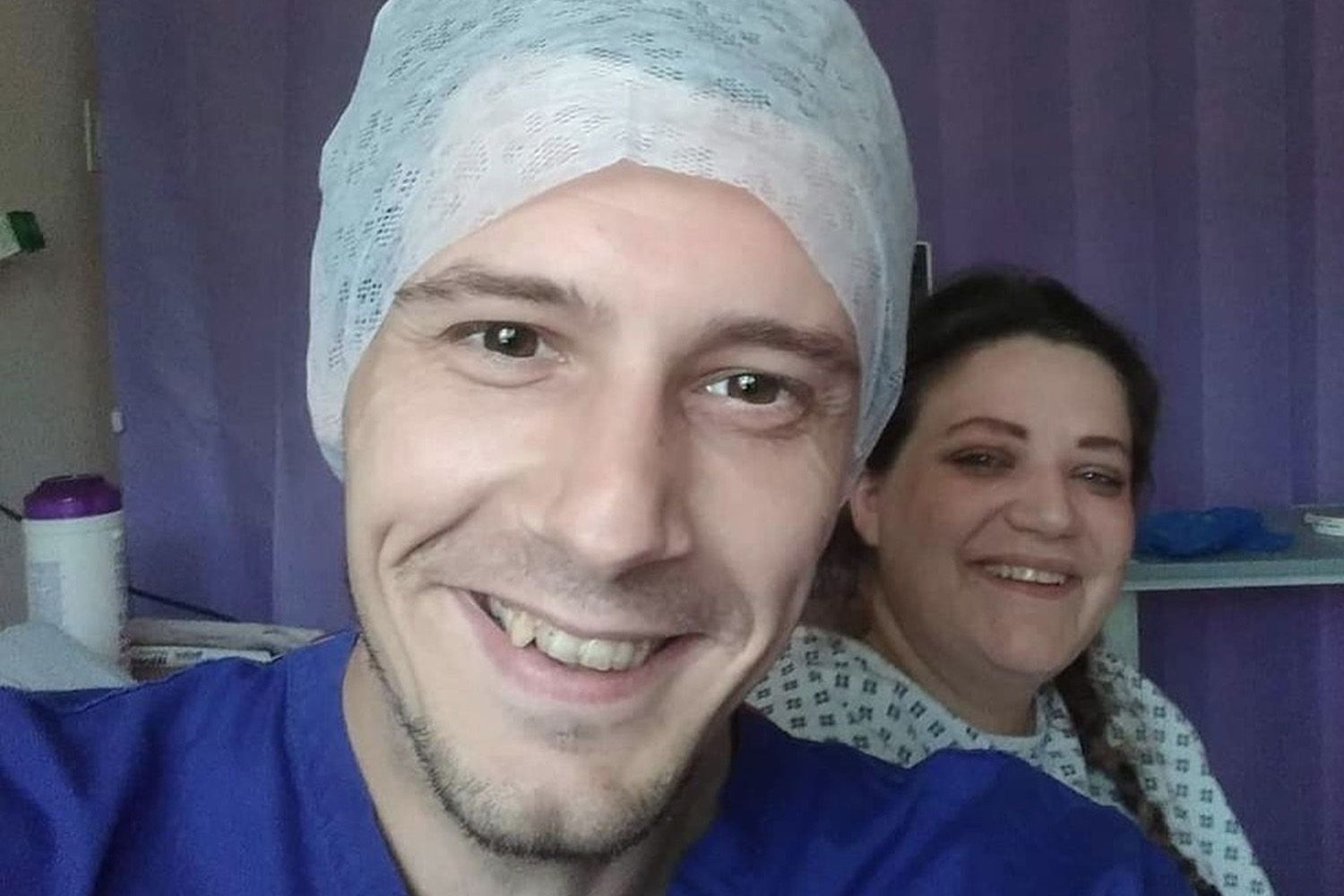
What began as persistent back pain for a 38-year-old father in St. Neots, England, quickly turned into a life-altering and ultimately fatal diagnosis. Steve Burrows died just weeks after learning that his symptoms were caused by advanced rectal cancer, underscoring the importance of paying close attention to unexplained health changes.
Burrows first noticed pain in his lower back in late July. Assuming it was related to strain or aging, he attempted to manage the discomfort on his own with stretching exercises inspired by yoga. His former partner, Bethan Kester, recalled that he initially dismissed the pain as minor and tried to ease it through movement and stretching.
A devoted father to Briannah, 14, and Lilly, 7, and a stepfather to teenagers Jaiden and Aleah, Burrows often joked about growing older despite being only 38. Kester said he frequently brushed off concerns, telling the children it was simply a sign of age.
As time went on, however, the pain became increasingly severe. Kester described how the discomfort fluctuated between a constant ache and sudden, intense episodes. At times, Burrows believed he was dealing with sciatica, stretching on the floor in an effort to relieve pressure in his back.
After nearly a month of worsening symptoms, Burrows sought medical attention. Doctors soon delivered devastating news: tumors were pressing on nerves in his spine, causing the back pain. Kester recalled the moment he shared the diagnosis with her, describing his fear and emotional distress upon learning what was behind his symptoms.
Despite the shock, Burrows initially resolved to fight the disease. Kester said he tried to remain hopeful, determined to face the diagnosis head-on. That optimism faded quickly when further tests revealed the cancer had reached stage 4 and spread to his liver. At that point, he understood the seriousness of the situation, though neither he nor his family expected how rapidly his condition would decline.
Burrows passed away just one month after receiving his diagnosis. According to Kester, the aggressive cancer progressed so quickly that it left his loved ones reeling. She later organized a GoFundMe campaign to help cover funeral expenses, explaining that the family had little time to prepare for his sudden loss.
In the wake of Burrows’ death, Kester has spoken out to encourage others to take unexplained symptoms seriously. She urged people to seek medical advice if something feels out of the ordinary and not to ignore persistent warning signs.
Reflecting on Burrows’ experience, she stressed the importance of persistence and second opinions. Initial hospital tests showed no inflammation, offering temporary reassurance. Just two weeks later, he was diagnosed with rectal cancer that had already spread to his liver. Kester emphasized that if symptoms continue despite normal test results, patients should continue advocating for themselves rather than delaying further evaluation.
Her message, shaped by loss, serves as a reminder that early investigation and persistence can be critical when it comes to serious illness.

Team Health Accessible
Health & Wellness Editorial Team
HealthAccessible editorial team delivers trusted, accessible, and evidence-based health information for everyone.